Health Journey 5
Am I Experiencing Burnout? Three Things That Can Help You Get Your Life Back.

Whether you call it burnout, a meltdown, exhaustion, a nervous breakdown, overwhelming fatigue, or one of the 288 synonyms listed, one thing is clear, you are persistently tired.
You wake up tired, you work tired, you parent tired, you go to bed tired and then you can’t sleep. When you finally do fall asleep, it seems like mere minutes pass before you start the day all over again.
The last few months (or years) may feel like the Bill Murray movie Ground Hog Day. Each day you try a new set of tasks, hoping that the next day you will wake up and it will be suddenly so much better. Yet, despite your creative attempts it doesn’t feel like one day is much different than the next.
Burnout is the result of a constant depletion of mental and physical energy with limited refuelling. This emotional and material drain on the body leaves its occupant feeling empty.
It’s hard to live in a world where we are wanted for so many tasks and by so many people. One in which our own pleasures of life seem impossible to incorporate. However, these pleasures are the things that make working/parenting/living worthwhile and fill our bucket. They are the reward at the end of a hard day/month/year.
Yet lately, filling ourselves up has repeatedly fallen to the end of our own “to do” list.
Tips to Get You Out of Burnout and Starting to Fill Your Bucket
One: Control What You Can Control
This means preserving the limited energy, creativity and inspiration you have, by reallocating tasks to others. You have the power to decide where to spend your energy dollars. This may mean asking for help, hiring someone to do a task, or simply moving this off your to do list.
A time savings of just 2 hours a day could provide you an opportunity for self-care, a nap, or just a moment to relax and recharge.
For example, reallocating 45 minutes of those minutes to an at home restorative yoga or yoga nidra class has been shown in research to be as restful as 3 or more hours of sleep. Putting it that way, it seems like an easy trade-off.
Some ideas include:
- Services (laundry, cleaning, pet walking) – these tasks may be able to be downloaded to someone in your household, or can be services that you engage with.
- Setting up a chore wheel – tasks that do not need to be done by you can be assigned to other members of the house to do on a rotating basis – vacuuming, washing the dog, folding the laundry, taking out the garbage…
- Food delivery services – whether the meals are already prepared, need some preparation or simply the groceries arrive at your doorstep, taking some time off of shopping, chopping and cooking can be freeing.
Two: Getting to the Root of Your Goals/Agenda
Whether we state them out loud, or share them with solely with ourselves, there are beliefs out there keeping us doing what we do every day. Our belief system has been built from our interactions with adults in our lives. Our often-unconscious commitment to them drives many of our daily decisions and habits.
If our belief is ‘I have to do it all by myself because that is what is expected of me’. Then it is easy to understand how passing off even a simple task is difficult because we’ve hardwired ourselves to believe that we can’t ask for help.
Or if our belief system is “If I don’t do it, no one will”, we can understand that leaving a task to be done by a colleague/partner or child may feel impossible because our belief embedded in us is that no one else cares if this is done.
So how do we get to what some of these hidden beliefs are?
The next time get a feeling of dread before starting an activity ask yourself:
- Why am I doing this?
- Why do I feel this way?
- What do I want to get from this?
Start journaling down your thoughts. Write them down for a week, and then go back and look at them and see how many of these are similar or different.
How can you make them into better beliefs?
| I have to do it all by myself because that is what is expected of me | I am strong and ready to ask for help so that I can spend my energy on things that are important to me |
| If I don’t do it, no one will | It’s time to show someone else how to do this task so that I can move on to something new and exciting. |
Repeat your new beliefs each morning until they become your automatic reaction and drown out your other non-supporting beliefs.
Three: Setting Boundaries
There is a saying ‘give someone an inch, they will take a mile’. This phrase is often a reflection of our personal boundaries. As soon as we let them down, we forget to put them back up. Burnout is about boundaries.
It’s a reflection of what we have been taught. From a young age that you were taught that saying yes, and doing what you are told is important.
Yet in all the teaching we have had, I have not yet had someone teach me how to say ‘no’.
No should not be a word that is offensive or arrogant, in-fact it simply means I do not want to have this experience/opportunity. It is not right for me.
It is certainly hard to say no, especially to people that are close to us, or influential on us.
However, we are the only ones that can protect our own schedule and our energy allocation. The only way we can prioritize yourself is by saying no to others.
It is going to be hard at first, but the more you say it and realize that people will still love you, and will admire you for your boundaries, the easier it will be.
Saying No Can Be Passive at First:
- Commit to working your 9 – 5 day, during 9 – 5. Stop the urge to check emails before bed, or before work starts. This means that the time isn’t being used by your office, instead you are deciding what to do with them.
- Make Your Own To Do List (ALONE). Writing your to do list for the day before you open your calendar/devices – means you set your own agenda and you are not letting someone else decide what your day will be like.
- Setting up a series of non-negotiables in your calendar. These are the important time-bound tasks, that you have been known to give up when someone else needs that space in your schedule.
This might be – being in bed by 9pm, or working out for 60 minutes three times a week. Book these in as a permanent non-movable schedule in your calendar and see how prioritizing yourself can fill your bucket.
Saying No Can Then Evolve into “In-the-Moment” Requests:
- Saying no to a lunch or dinner party because you had already allocated that time to something else.
- Choosing to pass on a volunteer opportunity because it will cut into your non-negotiable time.
- Refusing a work opportunity because it means you will need to do more and not less.
Burnout is mental as well as physical. A team of healthcare providers including therapists, naturopathic doctors and body workers can certainly help you build your physical resilience, however, just as critical is the work you do to prevent you from re-experiencing burnout over and over again.
Want to know more about burnout? Download my Burnout Scale by filling in the form below.
The scale shows you what to look for yourself, friends and family members and gives you the first step in identifying how you feel.
Want to read more about fatigue and insomnia? Two of the most common aspects of burnout we see in the office, read:
Insomnia No More! Tips on How To Get Some Rest.
Feeling Fatigued? 5 Reasons Why Feeling Flat Out Exhausted Isn’t Normal.

Dr. Christina Carew is a functional medical investigator who approaches health with an out-of-the-box problem solving attitude. Her patients love that she breaks what seems like complicated mumbo-jumbo into humorous stories, and digestible information nuggets. She witnesses that empowering patients to better understand their own health leads to better outcomes and healthier lives.
Christina became a naturopathic doctor after experiencing her own complex heath journey. Her passion to make health “easy to understand” was important for everyone. She is a forever learner, especially around the role our environment on health, how our gut really is the center of many health concerns and how our mental wellness affects our daily living.
An international speaker, a published author, and an outdoor enthusiast. Her husband refers to her as a mermaid for her love of water sports and the ocean.
Note: This blog provides general information and discussion about medicine, health and related subjects. The words and other content provided in this blog, and in any linked materials, are not intended and should not be construed as medical advice. If the reader or any other person has a medical concern, he or she should consult with an appropriately-licensed health care worker.
Can Normalizing Our Health Cause Harm?

Why Normalizing Our Health May Cause Us More Harm Than Good?
We are all guilty of having the words – “but it’s always been like that” cross our lips, when we are justifying a health concern that someone has just pointed out is unusual, or ‘not normal’.
How many times have we, or someone we know, ignored an ‘early-warning’ health sign because we thought it was just normal? The answer, too many to count.
Patients tend to fall into two categories – those that well document every lump, bump, unusual stool or rash and share it, and those that didn’t realize something was going on until it was far worse than they ever expected (diabetes, cancers, autoimmunity).
It is hard to figure out what is the right balance, however, erring on the side of PITA (pain in the ass) is much better than ignoring something that could have irreversible health outcomes.
I consider these mini-health clues and observations to be the equivalent of cracker crumbs leaving a trail to find Hansel and Gretel.
How do you know if you are normalizing something that may be a more serious health concern?
Some common phrases include:
- I’ve always been like this. Often used to describe areas such as constipation, painful menstrual cycles, waking up at night, frequent urination, bloating, nausea, etc. Just because you have always been like this, doesn’t mean that you should always be like this.
- This runs in the family. While genetics can play a role in health, the stronger link to what is common with your mama is the food you eat, the house you grew up in, and the emotional experiences you have shared. These environmental factors play a significant role in how you both feel and need to be taken into consideration when evaluating your health.
- It’s a sign of me getting older. Crossing the 40-year-old starting line doesn’t mean that your body suddenly starts falling apart. In fact, it is more likely that the damage done leading up to your 40’s has finally created enough of a sign that you are taking notice. Whether it is aches and pains, hair loss or hormonal imbalance, these signs of aging aren’t life catching up to you, it’s you finally paying attention to the clues your body has been giving you all along.
- My doctor said it was normal. Different types of health professionals are looking for different health markers. Your family doctor is largely interested in supporting blood tests that clearly show you have diabetes, liver malfunctioning, high cholesterol, or any other overt symptom. They want your diagnosis to be clear and present before prescribing you a medication or referral to investigate further. As a ND, I look for trends and patterns of you headed in a direction well before you get there. If I can stop diabetes in its tracks, you can be sure that I will use everything I have in my toolbox to help you avoid a lifetime of medications. (Check out this blog on normalizing fatigue)
- My Aunt Bernice’s neighbour has the same thing – she saw it on Facebook, and she cured it by taking Apple Cider Vinegar three times a day. Sometimes information passed along has a ton of value and can be really helpful for a patient, but often times it doesn’t make things better. If you are following advice from anyone (including a health care provider) and after three months you aren’t seeing changes, it’s time to get a second (or third) opinion.
It is hard to know what is normal, when your comparisons are often yourself, your parent or sibling, and the internet. That is why engaging with a health practitioner that asks a ton of questions (a good sign is a long intake form) and sees a ton of patients, so they are able to tell you where you stand on the normal range.
If I had a dollar for every patient that comes in and says – but they told me I had IBS. Which for me means, “I have no idea why you have diarrhea but I am going to normalize it by giving it a name”. I’d be a rich woman.
If something bothers you, it’s not normal. If something happens to you, that isn’t happening to everyone else you know, it’s not normal.
My goal is to continue to share information snacks in social posts and blogs that will highlight some of the most common “normal/not normal” symptoms, I see every day.
I want to give you a benchmark to evaluate your own health, and support you in knowing when it’s time to call in someone to help you follow the clues to find Hansel and Gretel.
About Dr. Christina Carew

Dr. Christina Carew is a functional medical investigator who approaches health with an out-of-the-box problem solving attitude. Her patients love that she breaks what seems like complicated mumbo-jumbo into humorous stories, and digestible information nuggets. She witnesses that empowering patients to better understand their own health leads to better outcomes and healthier lives.
Christina became a naturopathic doctor after experiencing her own complex heath journey. Her passion to make health “easy to understand” was important for everyone. She is a forever learner, especially around the role our environment has on health, how our gut really is the center of many health concerns and that our mental wellness affects our daily living.
An international speaker, a published author, and an outdoor enthusiast. Her husband refers to her as a mermaid for her love of water sports and the ocean.
Follow her at @healingme.ND on Instagram for more health information tips.
If you know someone that could benefit from this information, please share it!
Thank you for helping me on my mission to share ‘health real talk’. My goal is to inspire more health ambassadors in the world, just like you.
Remember put on your own oxygen mask first!
Note: This blog provides general information and discussion about medicine, health and related subjects. The words and other content provided in this blog, and in any linked materials, are not intended and should not be construed as medical advice. If the reader or any other person has a medical concern, he or she should consult with an appropriately-licensed health care worker
Isn’t It Time to Be Heard?
Finding Your Voice
Whether you feel great or crappy, you did it! You decided it was time to be heard and you started taking the first steps.
You got off your butt, freed yourself from Netflix and finally got the courage to go and see someone about how you are really feeling – physically and emotionally.
It’s time. You’re ready to share how you it’s been living in your body for the last 6 months (10 months, 10 years). It’s time for answers! You are done with good enough, and getting by, and you are ready for great.
Patiently you are sitting in your doctor’s office. Your name is finally called, you march down the hall mantra-ing to yourself ‘I will ask for what I want’ the entire way. You perch down on the plastic chair in the clinic room, and wonder if the person before you had the same concerns, and you wait.
You wait, until the healthcare professional (doctor, naturopath, dentist, chiropractor, life coach, psychologist, etc…), comes into the room and in the interim you practice what you want to say.
Your appointment starts, their voice questions, “How are you?”
Instead of sharing the prepared speech you have practiced. The one about how you are really doing. You respond with the most expected answer to the most asked question each and every day with “Good, and how are you?”
Ugh! And just like that, you feel deflated and defeated. What you had hoped to share seems like it has long ago been swept away in the tide that washes over the room.
Your appointment becomes this lobbying of expected responses back and forth, a renewed prescription and you are ushered out.
The cycle starts again. Where you work your way back to this very space. You will once again feel you can try again to ask the questions that brought you in, in the first place.
You are stuck feeling like you have not been heard.
When It Feels Like You Can’t Find Your Voice?
It’s hard sometimes to ask for what you want. What you really want and need, doesn’t easily slip out of our mouth. It takes courage and intention. We’re people pleasers and have become automated at putting everyone else before us.
We each have our automated answers, breaking this pattern is hard.
We complain to our families and closest friends. However when it is time to share what really matters with someone who may be able help you make a shift, the words sometimes feel forced to come out.
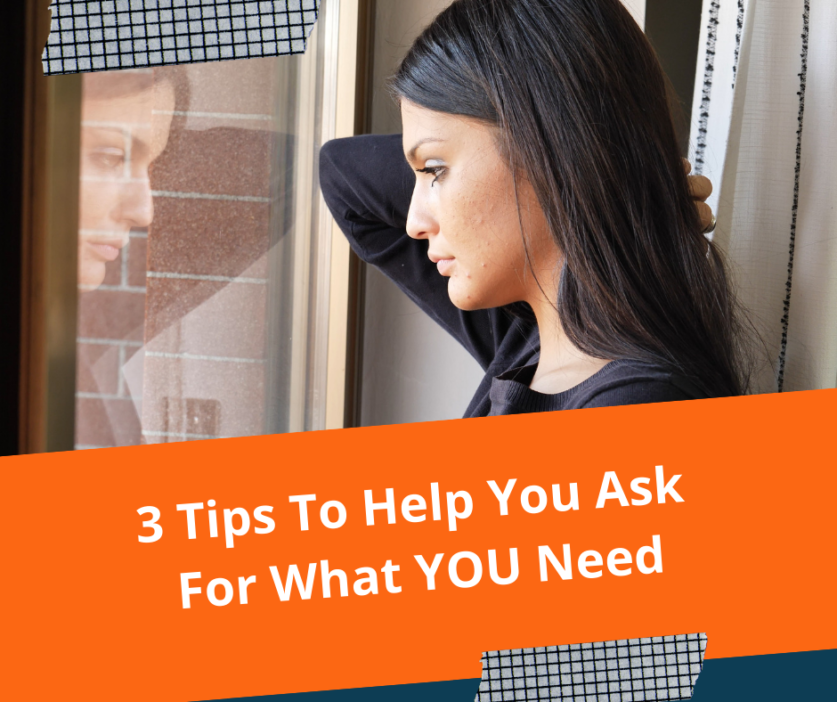
3 Tips to Help You Ask for What You Need
Tip 1: Finding Your Voice: Write it Down (and Bring It with You)

Memory jogs are so incredibly important in a world where we have information thrown at us in all directions.
Write down all the things you are feeling and want to talk. Bring this list with you, or even better send it ahead. Hand your note to the practitioner when you are lost for words, or feel derailed.
Tip 2: Finding Your Voice: Don’t Give Up Your Power
This appointment/conversation is about you and your needs. Start the conversation with what you need.
Answer: how are you? With…
“I’m really glad you asked that, there are a few things that I have written down that I was hoping to talk with you about today.”
Tip 3: Finding Your Voice: If You Don’t Get What You Need, Book Back in on the Spot

Sometimes we get derailed, or our practitioner doesn’t have time for us, or a fire alarm rings in the middle of our appointment (true story).
But instead of leaving feeling deflated, before you cross the doorway stop yourself. Turn around and make a follow-up appointment. Ask the reception to type in the notes what you want to talk about, what you didn’t get to today. Schedule yourself in, and revisit shortly.
Don’t get mad at yourself, or your practitioner. Instead, the most important thing is to take it all in stride. It’s easy to get down on yourself for not covering off everything you want/need in the session. As practitioners we are equally responsible to help you feel safe, and ask you enough questions to help guide it out of you.
It’s a two-way street, but sometimes the traffic doesn’t flow smoothly and that’s ok. There will be time to be heard, but you may need to make the first step to have that happen.
If you enjoyed this blog, you may also like:
Feeling Fatigued: 5 Reasons Why Feeling Flat Out Exhausted Isn’t Normal
Insomnia No More! Tips on How to Get Some Rest.
Or listen to my interview on the Mom’s Sipping Sangria podcast, where we talk about taking control of your health.
The Author, Christina Carew, is a naturopathic doctor who practices functional and strategic medicine in Toronto. As a medical investigator, she is in the business of changing people’s lives.
Dr. Christina focuses on finding the biomedical reasons for symptoms that are often unique to each patient and helps her patients remove the obstacles that stand in the way of living a healthy vibrant life.
Want to know if her approach is right for you – sign up for a free 20-minute consult at https://healingme.ca/book-appointment-naturopathic-doctor/
Note: This blog provides general information and discussion about medicine, health and related subjects. The words and other content provided in this blog, and in any linked materials, are not intended and should not be construed as medical advice. If the reader or any other person has a medical concern, he or she should consult with an appropriately-licensed health care worker
A Friend Told Me To Detox – Is It Safe?

At least once a week, I get asked about the need to detox from a patient or a friend. Some of them read about it or saw it on TV, others were approached by a friend or colleague selling a detoxification product. Their concerns are always the same – is it safe? Is it effective?
What is a detox anyways?
When the word detox flies around it’s sometimes hard to grasp what does that really mean?
Detox is many ways is like the word ‘exercise’. It can mean a casual stroll in the park to one person, and an ultra marathon to another. Detox can mean everything from adding nutrients and herbs to support the body in removing toxins, to changing your diet or lifestyle habits. The word detox means different things to different people.
While there is a range of companies and people offering this much heralded health fixer, the question remains can it really help?

Our bodies are toxic, we live in cities filled with pollution from transportation on the ground and overhead. We live near farms that spray their fields with pesticides and use bio-solids as fertilizer. We live in home renovations or near construction sites. From the air we breathe, to the food and water we ingest, our body’s encounter toxicants on a daily basis.
What should a detox do?
There is no doubt in my mind that we all have some exposure to chemicals that are better suited to the outside of our bodies rather than inside.
Detoxes help the body to remove these unwanted toxicants. This approach can help to remove chemicals, solvents, metals and molds that are stopping our bodies from performing optimally. It sounds pretty good. Getting rid of brain fog, improving memory, regain dexterity while providing our bodies a chance to heal.
However, it isn’t that simple.
Our body naturally gets rid of unwanted guests. Those it doesn’t recognize, through our organs of elimination and in the form of sweat, breath, urine and bowel movements.
For a detox to be effective – helping you to feel better and causing no harm – there are a few things you need to take into consideration, before you chase down this unicorn.
- Ensure the organs that clear the body are running optimally. Your efforts to clear out stored toxins are done in vain if they siting in another site in the body, simply moving location. Often this generally results in you feeling worse and not better. This is because these toxins are now active and being reabsorbed instead of removed. To clear the body, you need to have the organs of elimination supporting you.
- Avoid creating a supplement/medication time bomb in the body. Sometimes the detox you are participating in, will impact the effect of Over the Counter, Recreational or Prescribed drugs or supplements. This can result in an over or under dose – which may make you feel unwell.
- Use the right product for your body. Just like every key doesn’t fit into every lock, a one size fits all detox product may not the right one for you. Different toxins bind with different ingredients. It is important to ensure the product you are using is right for your toxin exposure.
- Be aware of side effects. Detoxing can happen very slowly, so slow that some people may not notice it is happening, or can happen very quickly and can knock you on your keister. Releasing toxins into the body can make you feel like a 100 bucks, or a piece of hot garbage. Be careful – and always consult a professional that can help you pick a product that fits your needs and goals.
Common detox symptoms include:
- intense sweating
- skin eruptions/rashes or acne
- flu-like symptoms
- headaches
- severe fatigue
- nausea
- body pain
- diarrhea/constipation and more..
- Don’t Detox in Isolation. Taking a pill or drinking a solution to remove toxins is only going to help you if you also remove the source(s) of toxins in your life. You also need to support the systems that are eliminating them, so they don’t reabsorb them. Ask yourself the following questions. Are you changing the pressures that are on your body? Are you able to reduce further absorption of toxins? Is your body eliminating toxins or are you just refilling the space you are making?
Do we need to do it?
Toxicity is at the root of many health problems. Yes, I believe it is important to do it, but I think that it is important that you have a planned approach so that your efforts are successful.
The Author, Christina Carew, is a naturopathic doctor who practices functional and strategic medicine.
As a medical investigator, she is in the business of changing people’s lives. Dr. Christina focuses on finding the biomedical reasons for symptoms that are often unique to each patient and helps her patients remove the obstacles that stand in the way of living a healthy vibrant life.
Want to know if her approach is right for you – sign up for a free 20-minute consult at https://healingme.ca/book-appointment-naturopathic-doctor/
Note: This blog provides general information and discussion about medicine, health and related subjects. The words and other content provided in this blog, and in any linked materials, are not intended and should not be construed as medical advice. If the reader or any other person has a medical concern, he or she should consult with an appropriately-licensed health care worker.