Burned Out 5
Am I Experiencing Burnout? Three Things That Can Help You Get Your Life Back.
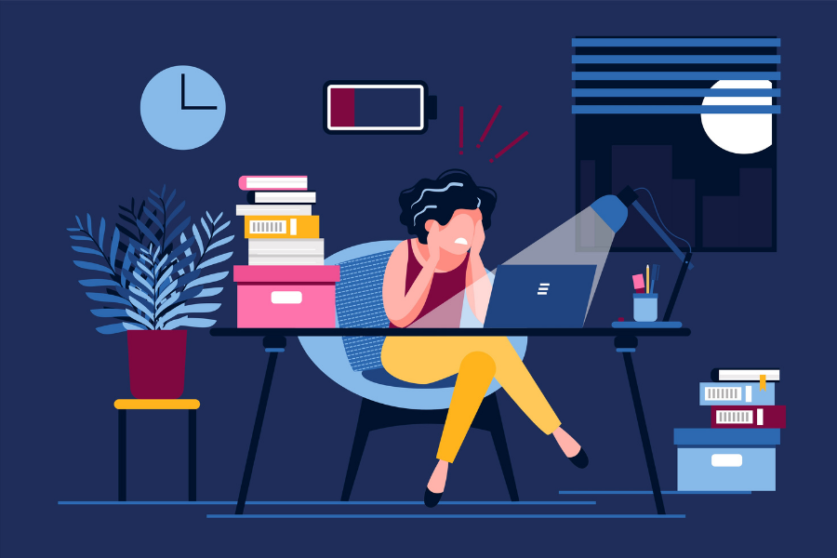
Whether you call it burnout, a meltdown, exhaustion, a nervous breakdown, overwhelming fatigue, or one of the 288 synonyms listed, one thing is clear, you are persistently tired.
You wake up tired, you work tired, you parent tired, you go to bed tired and then you can’t sleep. When you finally do fall asleep, it seems like mere minutes pass before you start the day all over again.
The last few months (or years) may feel like the Bill Murray movie Ground Hog Day. Each day you try a new set of tasks, hoping that the next day you will wake up and it will be suddenly so much better. Yet, despite your creative attempts it doesn’t feel like one day is much different than the next.
Burnout is the result of a constant depletion of mental and physical energy with limited refuelling. This emotional and material drain on the body leaves its occupant feeling empty.
It’s hard to live in a world where we are wanted for so many tasks and by so many people. One in which our own pleasures of life seem impossible to incorporate. However, these pleasures are the things that make working/parenting/living worthwhile and fill our bucket. They are the reward at the end of a hard day/month/year.
Yet lately, filling ourselves up has repeatedly fallen to the end of our own “to do” list.
Tips to Get You Out of Burnout and Starting to Fill Your Bucket
One: Control What You Can Control
This means preserving the limited energy, creativity and inspiration you have, by reallocating tasks to others. You have the power to decide where to spend your energy dollars. This may mean asking for help, hiring someone to do a task, or simply moving this off your to do list.
A time savings of just 2 hours a day could provide you an opportunity for self-care, a nap, or just a moment to relax and recharge.
For example, reallocating 45 minutes of those minutes to an at home restorative yoga or yoga nidra class has been shown in research to be as restful as 3 or more hours of sleep. Putting it that way, it seems like an easy trade-off.
Some ideas include:
- Services (laundry, cleaning, pet walking) – these tasks may be able to be downloaded to someone in your household, or can be services that you engage with.
- Setting up a chore wheel – tasks that do not need to be done by you can be assigned to other members of the house to do on a rotating basis – vacuuming, washing the dog, folding the laundry, taking out the garbage…
- Food delivery services – whether the meals are already prepared, need some preparation or simply the groceries arrive at your doorstep, taking some time off of shopping, chopping and cooking can be freeing.
Two: Getting to the Root of Your Goals/Agenda
Whether we state them out loud, or share them with solely with ourselves, there are beliefs out there keeping us doing what we do every day. Our belief system has been built from our interactions with adults in our lives. Our often-unconscious commitment to them drives many of our daily decisions and habits.
If our belief is ‘I have to do it all by myself because that is what is expected of me’. Then it is easy to understand how passing off even a simple task is difficult because we’ve hardwired ourselves to believe that we can’t ask for help.
Or if our belief system is “If I don’t do it, no one will”, we can understand that leaving a task to be done by a colleague/partner or child may feel impossible because our belief embedded in us is that no one else cares if this is done.
So how do we get to what some of these hidden beliefs are?
The next time get a feeling of dread before starting an activity ask yourself:
- Why am I doing this?
- Why do I feel this way?
- What do I want to get from this?
Start journaling down your thoughts. Write them down for a week, and then go back and look at them and see how many of these are similar or different.
How can you make them into better beliefs?
| I have to do it all by myself because that is what is expected of me | I am strong and ready to ask for help so that I can spend my energy on things that are important to me |
| If I don’t do it, no one will | It’s time to show someone else how to do this task so that I can move on to something new and exciting. |
Repeat your new beliefs each morning until they become your automatic reaction and drown out your other non-supporting beliefs.
Three: Setting Boundaries
There is a saying ‘give someone an inch, they will take a mile’. This phrase is often a reflection of our personal boundaries. As soon as we let them down, we forget to put them back up. Burnout is about boundaries.
It’s a reflection of what we have been taught. From a young age that you were taught that saying yes, and doing what you are told is important.
Yet in all the teaching we have had, I have not yet had someone teach me how to say ‘no’.
No should not be a word that is offensive or arrogant, in-fact it simply means I do not want to have this experience/opportunity. It is not right for me.
It is certainly hard to say no, especially to people that are close to us, or influential on us.
However, we are the only ones that can protect our own schedule and our energy allocation. The only way we can prioritize yourself is by saying no to others.
It is going to be hard at first, but the more you say it and realize that people will still love you, and will admire you for your boundaries, the easier it will be.
Saying No Can Be Passive at First:
- Commit to working your 9 – 5 day, during 9 – 5. Stop the urge to check emails before bed, or before work starts. This means that the time isn’t being used by your office, instead you are deciding what to do with them.
- Make Your Own To Do List (ALONE). Writing your to do list for the day before you open your calendar/devices – means you set your own agenda and you are not letting someone else decide what your day will be like.
- Setting up a series of non-negotiables in your calendar. These are the important time-bound tasks, that you have been known to give up when someone else needs that space in your schedule.
This might be – being in bed by 9pm, or working out for 60 minutes three times a week. Book these in as a permanent non-movable schedule in your calendar and see how prioritizing yourself can fill your bucket.
Saying No Can Then Evolve into “In-the-Moment” Requests:
- Saying no to a lunch or dinner party because you had already allocated that time to something else.
- Choosing to pass on a volunteer opportunity because it will cut into your non-negotiable time.
- Refusing a work opportunity because it means you will need to do more and not less.
Burnout is mental as well as physical. A team of healthcare providers including therapists, naturopathic doctors and body workers can certainly help you build your physical resilience, however, just as critical is the work you do to prevent you from re-experiencing burnout over and over again.
Want to know more about burnout? Download my Burnout Scale by filling in the form below.
The scale shows you what to look for yourself, friends and family members and gives you the first step in identifying how you feel.
Want to read more about fatigue and insomnia? Two of the most common aspects of burnout we see in the office, read:
Insomnia No More! Tips on How To Get Some Rest.
Feeling Fatigued? 5 Reasons Why Feeling Flat Out Exhausted Isn’t Normal.

Dr. Christina Carew is a functional medical investigator who approaches health with an out-of-the-box problem solving attitude. Her patients love that she breaks what seems like complicated mumbo-jumbo into humorous stories, and digestible information nuggets. She witnesses that empowering patients to better understand their own health leads to better outcomes and healthier lives.
Christina became a naturopathic doctor after experiencing her own complex heath journey. Her passion to make health “easy to understand” was important for everyone. She is a forever learner, especially around the role our environment on health, how our gut really is the center of many health concerns and how our mental wellness affects our daily living.
An international speaker, a published author, and an outdoor enthusiast. Her husband refers to her as a mermaid for her love of water sports and the ocean.
Note: This blog provides general information and discussion about medicine, health and related subjects. The words and other content provided in this blog, and in any linked materials, are not intended and should not be construed as medical advice. If the reader or any other person has a medical concern, he or she should consult with an appropriately-licensed health care worker.
Insomnia No More! Tips on How to Get Some Rest.
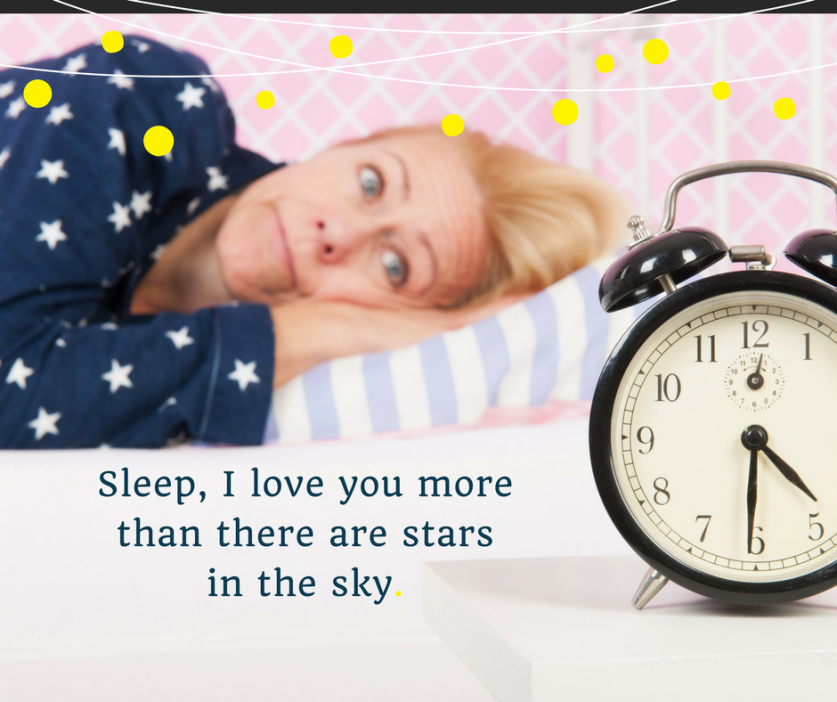
If you are reading this in the middle of the night (fighting insomnia), hoping for tips to make your sleep sound, I’ve been there, and you’ve come to the right place.
There are three categories of sleep challenges. First, people that have difficulty falling asleep. Second, those that fall asleep and then wake up and can’t get back to that peaceful slumber. Third, people that experience the first and second.
Sleep for me is a non-negotiable. It’s the one thing in my schedule that I refuse to move, compromise or reschedule. Without a good nights rest, I am irritable, unproductive and feel like I am always on edge.
Sleep deprivation for me feels like my physical and emotional self is just teetering on the edge and the slightest thing can push me into a place where I feel defenseless, vulnerable and just plain exhausted.
Insomnia = Adrenaline Kick

Anyone that suffers from insomnia can relate to their body becoming increasingly sensitive to their environment. Without sleep or with only limited sleep, the body is often pushing itself into using a fight or flight response just to keep going the next day.
Our adrenals are responsible for flight and flight, as well as for our stress response – cortisol. When our adrenals support our body in one direction for most of the day, we often push ourselves into overdrive (especially when fatigued).
Achieving a more restful state can be difficult (and may even seem impossible) after running on high, and sometimes even draining the reserve of hormones to support us.
Our body’s hormones, which include adrenaline and cortisol, are made of the same ingredients as other hormones in the body – estrogen and testosterone, thyroid hormones as well as melatonin. It isn’t surprising that if we are using a lot of one hormone, that forming others may be sacrificed.
So whether it is a lack of sufficient melatonin lulling you to sleep, or adrenaline sparking you awake in the middle of the night, here are some strategies to help the body beat insomnia, and find some rest after a stressful day/week/month/life.
Tips for Improving Sleep
Create a Relaxing Bed Time Ritual.
This ritual is something that calms the body down, slows you down and relaxes you. Ideas may include: reading, an Epsom salt bath, or making a soothing tea. There are so many wonderful sleepy time teas featuring herbs such as Chamomile, Aveena (Oat), Valerian, Lavender, Ashwaganda, Passionflower and Kava Kava. These herbs work to stop the overdrive and start the nourishment of the body.
Add in More Melatonin.
If your body isn’t falling asleep easily, and you feel alert for hours after heading to bed, you may not have enough melatonin to start the sleep process naturally in the body. Melatonin comes in several forms from slow release tablets to liquid.
It’s an art to find the dose of melatonin that hits your sweet spot. My recommendation is always start low. Add in more melatonin if you find it isn’t working for you. If you wake up groggy the next day, then reduce the amount of melatonin you take the next night. Grogginess means it hasn’t quite worn off yet.
Reverse Your Body’s Overdrive System.
There is a yoga pose called Viparita Karani (legs up the wall), which is super easy and can help your body to find a sense of calm quickly. Simply lie near your bed in this relaxing pose and let gravity do its job. In fact, if you wake up a night, this is a great way to lull your body back to a dream state.
Stop Thinking.
Easy to say, harder to do. Have you ever notice that when you finally have a moment to turn off your brain, that it seems easy to fall asleep. I find this happens when I am watching TV, or lying in savasana in a yoga class.
Turning your mind off can be challenging but effective. Start by trying a simple 2 minute meditation – this can be done lying down, or sitting up. Try to clear your mind and simply focus on your breath. Every time a thought comes up, simply label it as a thought and send it packing. Meditating can also help bring your body some much-needed rest in advance of falling (back) asleep.
Darken Your Space.
Those funky yellow glasses that Bono often wears are designed to block the blue light out at night and help him to achieve a restful peaceful state much easier. Blue light actually stops our melatonin from flowing and can even give us a kick start.
Similarly, the sun peeping out in the morning can wake some people up. Make your room as dark as you can. This may involve turning off the technology, closing the blinds and/or wearing a mask to sleep. It may be harder to wake up when its dark, but its also easier to fall asleep.
Take a Technology Break.
Beyond the blue light our bodies can also feel the frequency of our electronics. Even if you use your phone or tablet as your alarm, simply shifting its charging space to an adjacent room can impact the quality of your sleep. Take an electronics free trial week and see how your sleep changes.
Tackle Your Adrenaline Wake-ups.
Stop the frustrating 2 – 4 am wake-ups, by connecting with a health professional that can give you some advice specific to your body. However, strategies such as supplements, nutrition, botanicals and/or acupuncture can help to nourish your body. They help to reset your internal alarm clock so that 2am isn’t your new start time.
Remember you don’t have to beat insomnia alone.

The Author, Christina Carew, is a naturopathic doctor who practices functional and strategic medicine.
As a medical investigator, she is in the business of changing people’s lives. Dr. Christina focuses on finding the biomedical reasons for symptoms that are often unique to each patient and helps her patients remove the obstacles that stand in the way of living a healthy vibrant life.
Want to know if her approach is right for you – sign up for a free 20-minute consult at https://healingme.ca/book-appointment-naturopathic-doctor/
Note: This blog provides general information and discussion about medicine, health and related subjects. The words and other content provided in this blog, and in any linked materials, are not intended and should not be construed as medical advice. If the reader or any other person has a medical concern, he or she should consult with an appropriately-licensed health care worker
Feeling Fatigued: 5 Reasons Why Feeling Flat Out Exhausted Isn’t Normal
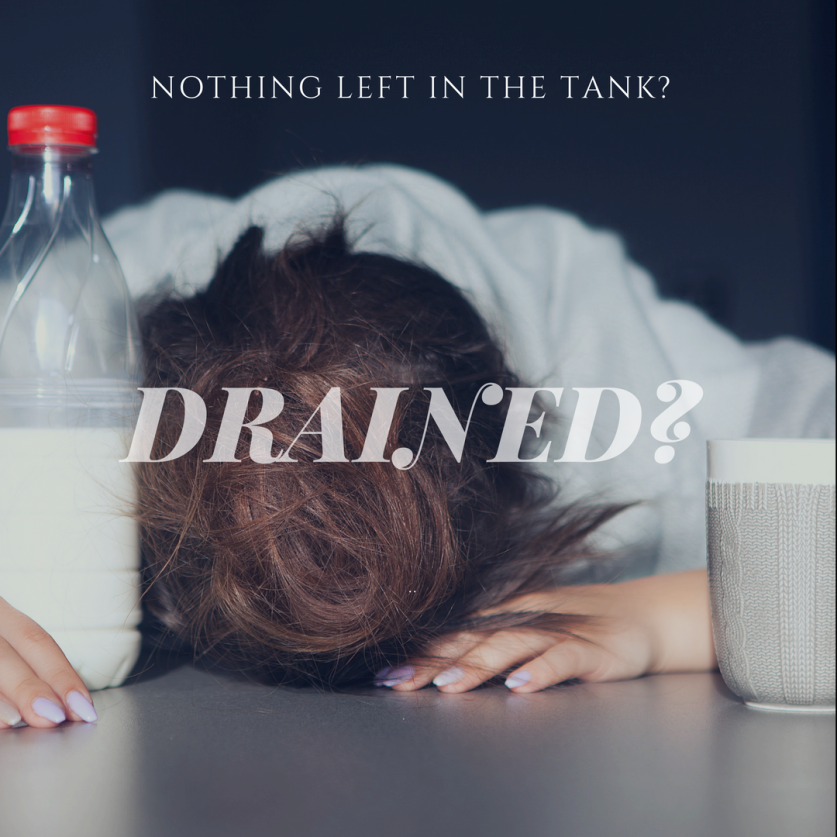
Have you ever told your medical professional – I am so tired, I’m suffering from exhaustion? Was the reply ‘that’s normal for someone that is (insert new mother, working professional, commuter, etc)”.
If you find yourself dragging yourself out of bed? Using coffee or caffeine drinks to keep you going? Or wanting to take a nap under your desk mid-afternoon? This is not normal.
Exhaustion isn’t Normal
Fatigue is one of the medical conditions that is non-specific to any particular condition. Because it isn’t a clear cue, it is often pushed aside. This takes work to find out why you are tired. And your reason, may be different then why the person at the desk beside you is holding their eyelids open with toothpicks.
Some of the usual culprits that are blamed include:
- Working too much
- Too much stress
- Poor eating habits (content or frequency)
- Iron Deficiency or Anemia
- Low vitamin D
- Lacking enough vitamin B12
All of these will definitely impact your body fatigue levels. But there are also a list of other reasons that are often never considered. This blog gives you a snapshot of five other common possibilities.
Reason #1: Hydration
This isn’t just about drinking water, although that is super important, but are you actually missing the electrolytes in your body that keep things going. Mineral electrolytes such as potassium and magnesium support endurance and energy levels throughout the day.
Before you go reaching for a sports drink – keep in mind that these drinks are filled with sugar, which can actually cause you to crash further. Click here for a homemade electrolyte drink you can make ahead and take with you to the office.
Want to know more about water hydration and fatigue click here.
Reason #2: Low ATP
You may remember ATP from high school science class. The most important thing to remember – it is the fuel that is responsible for energy in the body. It’s like running a car with an empty gas tank. It certainly isn’t going to perform to expectations, and may actually crawl to a slow stop along your journey.
Your body makes ATP through some complicated cycles in the body. Most of which involve adding and removing nutrients. If you are lacking in these nutrients the cycle will just stop.
Feel like you’ve hit a wall? This may be that your ATP production is slowed right down, and your body is yelling at you to stop.
Reason #3: Toxicity
When you look out the window of your condo or car you may see a thin layer of dirt covering it. It seems like everything is clear. But the second the window is washed its like a whole new world is displayed bright and full of life.
Toxicity in the body is sort of like that dirty window. When it creeps into your life slowly you sometimes don’t notice it is there, but as soon as it is gone it’s like a whole new body.
We get exposed to all kinds of toxicity. Some people are genetically predisposed to absorb more, and some people just don’t detoxify well. Toxicity can be in the form of car pollution such as from sitting in the endless traffic. It comes from airplane travel overhead, living close to a highway or busy street. Perhaps you are living in or near a construction site, drink water from old pipes, live or work in an older building. Living near a golf course or park that is sprayed with pesticides can contribute to toxin exposure.
We can’t avoid toxin exposure in the 21st century, but we can make sure to clean our windows regularly, ensuring that it doesn’t build up.
Reason #4: Adrenals
Maybe you’ve heard about adrenal fatigue or adrenal exhaustion. Your adrenal glands are small (the size of walnuts) and sit on top of your kidneys. They are responsible for your ability to fight or flee a situation. They also regulate our ability to deal with stress. The more stress, the more these little walnuts are squeezing out hormones to help our body deal with the threats. Threats can be physical or mental.
Just like anything you use over and over again, without refilling these precious gems, they run out of steam. When you adrenals are low, your energy is low. You probably will also notice a few other things happening in your body.
Some of the common symptoms of adrenal exhaustion include: weight gain around the middle, adult onset acne, hair falling out more quickly then usual, inability to feel energized in the morning.
Want to know if your adrenals may be the culprit, click here.
Reason #5: Sleep
You’ve probably read all about the need for dark spaces, no electronics and appropriate levels of sleep. But it doesn’t always fit everyone’s lifestyle. Need to know more about sleep check out our insomnia blog here.
Sleep is not as linear as we hoped. For some of us creative time is at night. Others have children or work nights. Whatever your challenge may be, there are always ways to help you get better quality sleep.
Research actually tells us that it isn’t about the number of hours you get, but about the quality of sleep you get in those hours. That is why some people seem to soar on little sleep, and others feel like they are moving mountains when their sleep gets cut short.
One of the contributors to better quality sleep are neurotransmitters – these are the hormones in our brain that help us to calm our brain and fall into deep sleep.
Ready to Reclaim Your Health!
Need to figure out if you are burned out? Check out our burnout scale and find out…
The Author, Christina Carew, is a naturopathic doctor who practices strategic medicine in Toronto.
As a medical investigator she focuses on finding the biomedical reasons for symptoms that are often unique to each patient.
She helps her patients remove the obstacles that stand in the way of living a healthy vibrant life. Christina focuses on empowering patients to make informed decisions on their health journey.
Note: This blog provides general information and discussion about medicine, health and related subjects. The words and other content provided in this blog, and in any linked materials, are not intended and should not be construed as medical advice. If the reader or any other person has a medical concern, he or she should consult with an appropriately-licensed health care worker.
Can’t get by without coffee in the morning, read this…
Do you feel like you live in a haze until about 10am? Are you relying on your adrenals to shoot out adrenaline to get you moving in the morning?
Does your local barista have your gallon of extra strong coffee awaiting you as you roll by on the way into the office? If you are nodding up and down, this article is for you!
What if I told you there was no such thing as a ‘night owl’ or an ‘early riser’. These labels are often reflective of when someone’s adrenaline decides to give them an added boost. In fact, our bodies are designed to be diurnal, waking us up as the sun rises in the sky. Our brain should release melatonin as the sun goes down, coxing us into a deep and repair-rich slumber.
Are You Hormonal?
Who is the culprit that makes it hard to go to sleep? The one who makes it feel like being pulled out of cement to wake up, and ensures our local coffee shop continues to survive – HORMONES.
Hormones aren’t simply the thing you felt raging as a teenager. While those ones do count, they only represent a few of the numerous hormones in our body that regulate important processes including: sleep, metabolism, temperature, mood, libido, stress response and so much more.
So how does coffee help? Well coffee doesn’t really help, in fact it actually does us some harm. Coffee pushes our bodies into a state of adrenaline. The result is we are now experiencing our day as though we were running from a fire, or being chased by a tiger.
It pushes our body into this maximum state to help us get to safety. However, we don’t really ever slow down, do we? Instead of resting, we just push more on the gas and hope for the best.
Are You Running From a Bear?
Running in this hyper state shuts off some of the other functions in the body – the ones that don’t help us run from the bear. Functions like metabolism. Ever notice on the days you are super stressed, that it feels like your lunch is just sitting there? Or maybe you’ve forgotten to eat all together?
Somewhere mid-afternoon, we run out of adrenaline and suddenly our body crashes. This state of tired can be overwhelming. It may feel like you want to crawl under your desk, or hide in the coat closet, just for a few minutes of rest.
The science behind this is pretty simple. Our bodies handle stress and day-to-day activity through a hormone called cortisol. As long as we have an adequate cortisol rise in the morning, it can that slowly release through out the day. This keeps us having enough gas to keep our body producing all the relevant hormones to get us through our day. This allows us to feel like we can manage stressful situations, as well as make good choices and decisions all day long.
When our cortisol is low (this can be for a number of reasons) our body taps into adrenaline. Adrenaline pulls us up high enough to push through our day. But adrenaline doesn’t really have any other gear then high, so we get stuck in high. Most of us experience a highly productive period of time followed by a disastrous crash when the adrenaline shuts off.
If you see yourself in any of the descriptions above, know that your hormones are probably not operating at optimal. It means that you could be having problems losing weight, staying focused, getting pregnant, staying healthy and so much more.
How Are Your Adrenals?
Wonder if you may be taping your adrenals dry? We’ll send the “Am I headed for burnout checklist” right to your inbox.
So, give me a call when you are ready to jump off the adrenaline train and get back to health.

The Author, Christina Carew, is a naturopathic doctor who practices functional and strategic medicine.
As a medical investigator, she is in the business of changing people’s lives. Dr. Christina focuses on finding the biomedical reasons for symptoms that are often unique to each patient and helps her patients remove the obstacles that stand in the way of living a healthy vibrant life.
Want to know if her approach is right for you – sign up for a free 15-minute consult at https://healingme.ca/book-appointment-naturopathic-doctor/
Note: This blog provides general information and discussion about medicine, health and related subjects. The words and other content provided in this blog, and in any linked materials, are not intended and should not be construed as medical advice. If the reader or any other person has a medical concern, he or she should consult with an appropriately-licensed health care worker.